
When Stuart Ainsworth tells other disease researchers he studies noma, he is most often met with a blank stare. “There are people who have worked in neglected tropical diseases their entire lives, and they’ve never heard of it,” says Ainsworth, a microbiologist at the University of Liverpool.
This is an illness that, until 2023, was so marginal to global health that it was not even officially included among the diseases the world had agreed were neglected.
Yet its obscurity is only part of the tragedy of this deadly disease, which can destroy a child’s face in a matter of days, and which kills untold tens of thousands per year. Although noma has been known to medicine for centuries, we still cannot answer the most basic questions about it.
“I’ve got a Victorian medical textbook published in London in 1876 for [doctors] in the city, and it covers noma,” says Ainsworth. “What you read in it could have been written yesterday, because our knowledge of the disease hasn’t improved at all.”
Noma is one of the most baffling subjects I’ve ever come across in global health. To learn about it is to be bombarded by unanswered questions, each more frustrating than the last. How many children get it? Where? What causes it? And why do we still know so little?
I put these questions to three medical researchers who specialize in noma, as well as the organization funding the largest research effort ever undertaken on the disease. What emerged was an explanation for why noma has lost the competition for attention, advocacy and money at nearly every turn, even by the standards of other neglected diseases.
(And lest this all sounds too depressing, stick around until the end, because there is good reason to hope that this year may mark the beginning of a new chapter.)
A Children’s Disease of Extreme Poverty
It’s helpful to start with what we actually know about noma, with the caveat that much of this rests on educated guesses extracted from isolated cases.
Noma begins with inflamed or bleeding gums. This progresses to a painful, destructive gum infection, and then to rapidly spreading gangrene that destroys bone and soft tissue in the cheek, jaw, lips, eyes, or nose. Within mere days, it can open a hole in a child’s face.
Our best estimate is that, untreated with antibiotics, noma kills 90 percent of children who get it. Child survivors are almost always left with profound facial disfigurement, and often some level of disability.
The disease overwhelmingly infects children between two and six living in extreme poverty. Why this age and these most vulnerable children develop it remains unclear. Researchers suspect that factors like malnutrition, poor oral health, a weakened immune system, and recent illness all somehow combine with one or more microbes to trigger the disease.
Noma likely strikes tens of thousands of children each year, although no one can say how many with confidence. The World Health Organization still publicly cites a 1998 estimate of 140,000 new cases annually, although one expert I spoke with believes the true figure may be closer to 40,000. (There has never been a broad epidemiological study, for reasons we will get into.)
Today, most documented cases come from the Sahelian countries in West Africa. But the map of noma may reflect where people are looking as much as where the disease actually occurs. “Nigeria is always portrayed as the country that has a lot of noma, but Nigeria is just one of the countries that actively engages in noma advocacy, detection and surveillance,” says Anaïs Galli, a researcher at the Swiss Tropical and Public Health Institute. “There are other countries with very similar risk factors that are not on the map.”
Mozambique is one example. Until recently, the country had only 2 documented cases of noma. Then, in 2024, researchers began looking. “Now so many survivors have been found that dedicated research and treatment centers are having to be set up in the country,” Ainsworth says. “If you look for it, it’s there.”
Noma’s history also points to a stranger truth. Conditions resembling it appear in writings as far back as those of the ancient Greek physician Hippocrates’, and over the past few centuries, cases have been documented on every inhabited continent. For example, “there were a lot of cases previously reported in Europe, especially during the world wars,” including in Nazi concentration camps and among civilians “in the wartime population in the Netherlands,” says Elise Farley, a longtime noma researcher with Médecins Sans Frontières.
The pattern implies that Noma appears wherever hunger and extreme deprivation converge, then “as living conditions improve, as children have enough food and are vaccinated against routine diseases, noma almost always disappears,” Farley says.
(Researchers also strongly believe noma is not contagious, but even that remains unproven. “Probably not,” Ainsworth says, “but we can’t answer that conclusively because the data doesn’t exist.”)
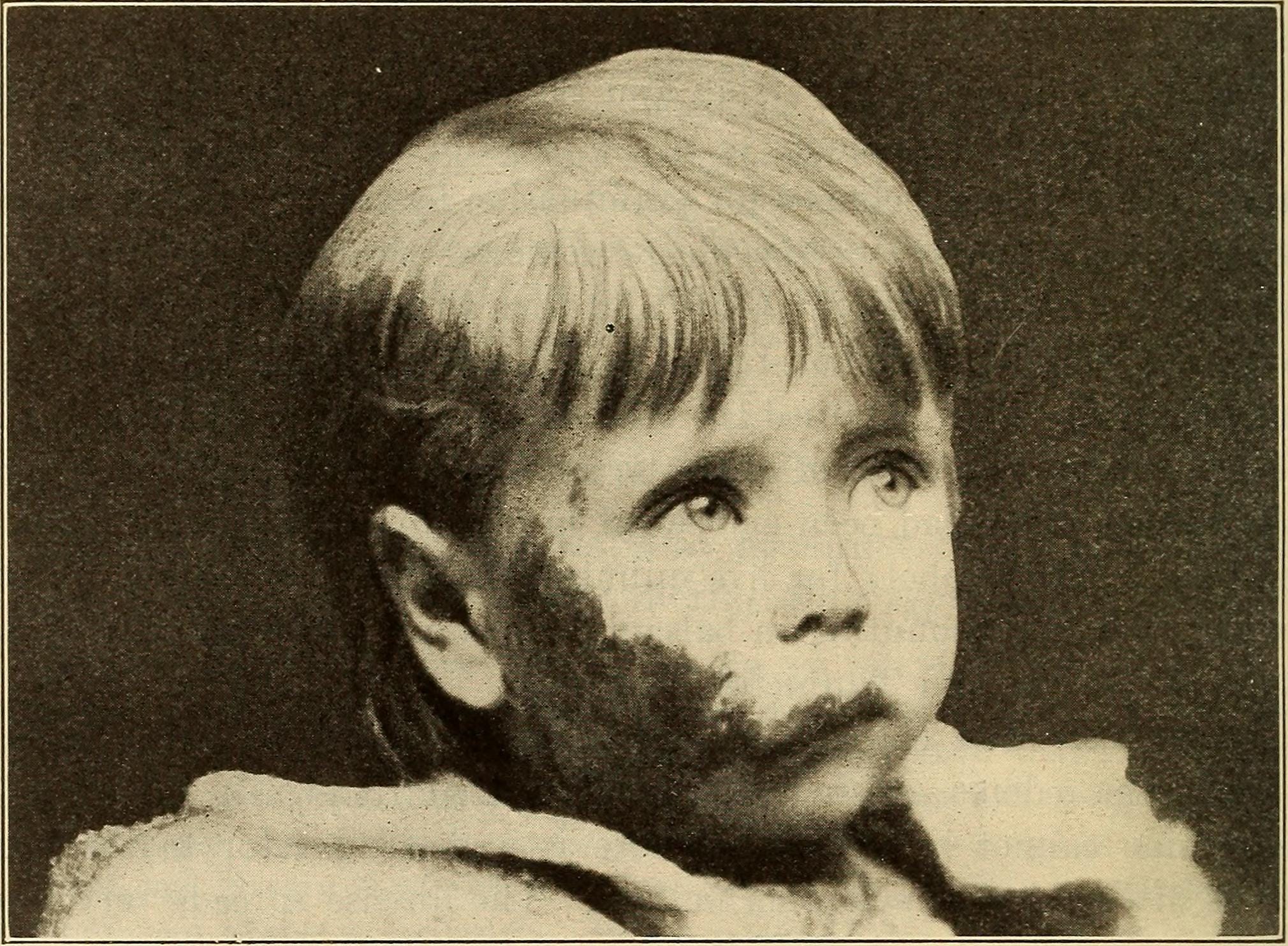
Most strikingly, we still don’t know what microbes set noma in motion. I first encountered the disease earlier this year while covering a study co-authored by Ainsworth and Farley. Their team found previously unknown bacteria, called Treponema A, in 19 children with noma. It was a tantalizing clue, but hardly a solution: the bacteria could help trigger the disease, or simply thrive after noma has already taken hold.
And unlike malaria or HIV, noma may ultimately have no single culprit. It may be that Treponema A or another unidentified microbe always triggers it. Or noma may emerge only when several bugs act together as part of a far more complicated process. We simply don’t know.
No money, no research
By now you should be asking the obvious question: why do we know so damn little?
And honestly, the thinness of the research record verges on the absurd. This is a disease that, between 1843 and 2021, had fewer than 150 total scientific studies published on it. That’s so few, “that you can barely say you’ve got a field. It is a blank slate,” says Ainsworth, “in comparison, there were around 650 papers on rabies in 2021 alone.” Even worse, much of the existing research merely documents individual cases or is focused on the medical reconstruction of the facial damage left behind. Few studies have tackled the foundational questions.
The core reason behind this is that almost nobody funds research on noma.
This is partially due to the fact that it’s abnormally expensive to study this disease. Consider that noma is rare, seemingly due to a complex mix of microbes and conditions, concentrated among children whose extreme poverty leaves them largely in remote, hard-to-reach places, and progresses with extraordinary speed.
Together these factors exponentially raise the cost of any study, making major investment hard to argue for, given noma’s relatively small global caseload.
For example, to answer the basic epidemiological questions—where does it occur and how many children develop it?—scientists may have to monitor enormous numbers of children to find enough cases for a meaningful study. This would involve large, expensive teams operating far from hospitals and laboratories, sometimes amid violent conflict. And the staffing, transport, and security costs are only the beginning; every other logistical hurdle involved in reaching communities that medicine already struggles to serve will add to the bill.
Now, to answer the basic biological questions—what microbes and immune system dysfunctions cause it?—scientists face the same logistical problems, although requiring fewer children, bringing the scale and cost down. The catch is that researchers must find them early enough to provide emergency care (obviously and primarily), but also to collect biological samples before time or later infections obscure what is happening inside the mouth.
The end result? Among countless other gaps, noma has never had a broad epidemiological study, and the closest thing to an immunology study is over 50 years old.
Of course, this is all no criticism of the researchers who have kept noma science alive. The individual studies they have carried out matter, but the funding has never been sufficient to attempt the field’s biggest questions. (MSF’s support for the Treponema A study I described earlier is a notable exception.)
And, after all, where could the research money come from?
Certainly not from pharmaceutical companies. Noma offers almost no commercial incentive: pursuing the basic science to create a new treatment or rapid test would likely cost far more than companies could ever earn from selling it to a small, extremely poor patient population.
And the non-profit organizations closest to the disease often have good reason to prioritize care over research. Groups like MSF are doing their best with their own scant resources to, say, keep children alive, provide surgery, or support survivors. Faced with that reality, an expensive study can understandably feel less urgent than the child already in front of them… especially for a disease whose broadest solution is already clear.
Because the bitterest paradox at the heart of noma research is that while the disease raises endless scientific questions, we largely know how to prevent it. Noma disappeared from wealthy countries as nutrition, vaccination, sanitation, oral hygiene, and basic healthcare improved. In that sense, the ultimate cure for noma is ending extreme poverty.
The Neglect Trap
The complexity and expense of noma research is not the only reason the science has stalled. Just as important is the disease’s almost total lack of visibility.
Because the people overwhelmingly affected by noma are exceptionally poor, they are often politically marginalized. Many children die before reaching a health facility, and those who survive with severe facial disfigurement often face lifelong stigma and shame—and are frequently kept hidden from public view.
That invisibility can also be reinforced from above. Local governments often have little incentive to seek out and report cases of a disease that reflects poorly on them. “Noma is a strong indicator of inequities and neglect,” Galli says. Officially acknowledging cases can expose “where the problems are in how you manage a country.”
Taken together, this means that noma lacks many of the forces that normally build advocates and a constituency around a disease. While there is a survivor advocacy organization called Elysium, whose members helped push for noma’s recognition by the WHO, it was only founded in 2022. (Their work, and the lives of noma survivors more broadly, deserve their own story. I did not interview them for this piece, so I do not want to pretend to speak for them here.)
But the broader problem remains: it is difficult to build a movement around people who have never been counted and are often hidden from view.
You can start to see the trap noma is caught in. Without visibility, how can you build political pressure for research or even, say, celebrity advocacy? And without those, the few public or philanthropic research institutions that would be likely to fund this work (like the U.S. National Institutes of Health, the European Union, or The Wellcome Trust) are both less willing and less aware of making a costly, long-term investment.
And funders also generally want evidence of a disease to ensure that their money will produce meaningful results. But noma researchers struggle to provide that evidence… because producing it is the very thing they need funding to do! As Ainsworth put it, “If you’re just going off, ‘Listen, this is a problem. Believe me, I’ve seen it,’ funding agencies are not going to risk it.”
Ultimately, noma is stuck in a sort of doom loop of neglect: the cost and complexity of the science, the poverty and invisibility of the people affected, the lack of commercial incentive, and the absence of the basic data that might persuade anyone to invest. Each issue worsens the others.
Which makes me all the more struck by the fortitude of researchers like Farley, Ainsworth, and Galli, who have stayed with noma anyway, driven by the hope that they can move the field forward and by a deep commitment to act when so few others will.
A Path Forward
Now, it’s not all bad. There are three reasons to hope for something better.
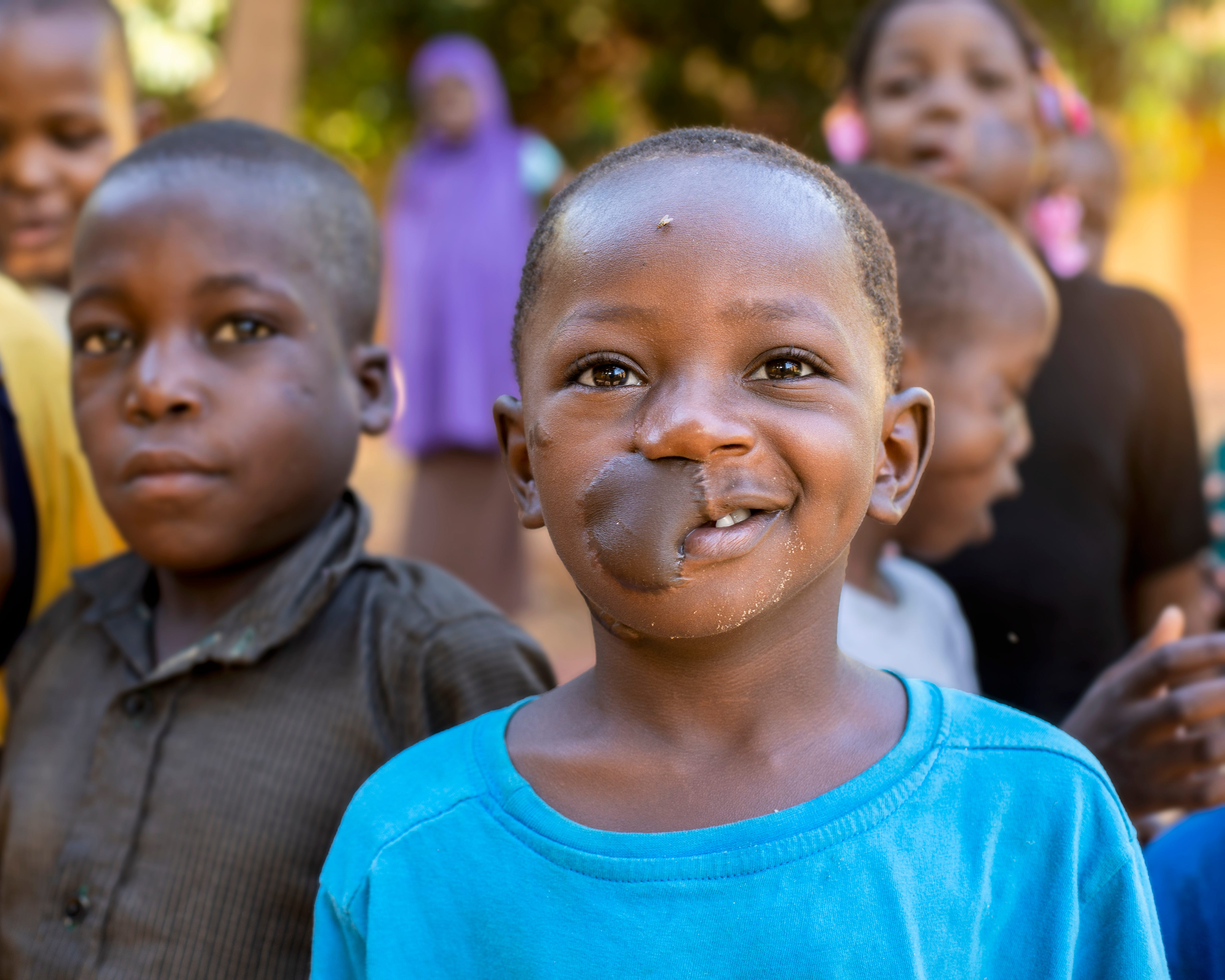
1.) The first is the emotional power of the disease itself. It is visually shocking, and overwhelmingly affects the world’s most vulnerable children. Once seen, photos of those afflicted are hard to forget, giving the disease unusual power to generate sympathy. For example, in 1994 a TV program about noma directly inspired the creation of Hilfsaktion Noma, a small German charity (which we will return to shortly.)
Of course, those images can also become exploitative. “The ethical dilemma is how do you present noma when it is usually small children with the disease?” Galli asked, noting the ever-present risk of exposing children to lasting stigma or reducing survivors to their injuries.
2.) The second reason is the draw of sheer scientific opportunity. In most mature fields, researchers spend their careers chipping away at the edges of questions that generations before them have already defined. Not true with noma!
“Whatever question you answer is going to be a massive step forward,” Farley said. “Even if it feels like this tiny master’s project or maybe a PhD, you can make a huge difference.” Ultimately, Noma offers something vanishingly rare in modern science: the chance to build a field from the ground up.
And that’s more likely to happen now, than at any time before. After decades in which noma researchers often worked in isolation, today they increasingly form a small but closely connected community, sharing data, contacts, funding opportunities, and research infrastructure to stretch the field’s meager resources as far as they can.
3.) And lastly (and most importantly!) scientists finally have enough money to attempt research on one of noma’s biggest unanswered questions: its biological causes.
In March of this year the small German charity, Hilfsaktion Noma, committed roughly €2 million over 5 years to launch the PathNoma Alliance, a research consortium in which Ainsworth and Farley play key roles. In the broader world of medical research, €2 million is a modest sum. But for noma, it is enough to attempt something unprecedented.
Over five years, researchers will study patients across several countries, examining both the microbes in their mouths and what is happening in their immune systems.
The timing is almost absurdly serendipitous, given that it’s coming as governments across the world have slashed global-health spending. Mathis Winkler, who leads projects at Hilfsaktion Noma, told me that the charity had previously questioned how much this type of research would change: after all, we already know children need food and basic healthcare to stop it. What changed their mind is that Farley and Ainsworth presented a convincing project with a plausible path from basic science to helping children.
It’s an exciting time because the project could, hypothetically, produce an extraordinary range of findings. Researchers may finally identify the microbe (or microbes) behind noma. They may discover what is different about the immune systems of children who develop it. They could discover a biological sign of the disease that could be detected with a rapid test, allowing health workers to intervene at the earliest stages. And they may learn enough to replace today’s broad cocktail of antibiotics (the only known treatment for an active case) with something far more targeted.
Of course, none of this is assured. “But one thing is for sure. At the end of PathNoma, we will know more about noma than we’ve learned in the previous hundred years,” Ainsworth told me.