
This week I want to dive into some news out of South Africa, where the United States is pulling all funding for the country’s HIV response.
The story broke about a week ago, but I think it’s worth zooming in on because there’s a strange mismatch that I’m not seeing fully explained elsewhere: which is that the gap that the U.S. is leaving looks manageable on paper… but warnings about what’ll happen when American dollars disappear are dire. Is this alarmism, or was the American share holding up more than it seemed?
To answer that question I want us to start with how the cuts are being publicly1 justified, because it’s not an easy argument to wave away.
As a State Department official told the New York Times, “South Africa is a middle-income country and is more than capable of supporting its own health programs.” And the reality is that there’s actually quite a lot of truth there.
South Africa is certainly not Lesotho, Tanzania or Malawi, all of which overwhelmingly depend on U.S. dollars to combat HIV. Instead, despite having the world’s largest HIV epidemic—with roughly 8 million people living with the virus—South Africa already runs one of the most self-sufficient programs in sub-Saharan Africa. It pays for the majority of its HIV response, and nearly all of the antiretroviral medicines that keep those 8 million people alive.
For its part, the United States contributed about $400 million in 2024, which covered just 17 percent of South Africa’s overall HIV response. (Compare that to Lesotho, where the U.S. pays over 80 percent.) And that contribution to South Africa was halved in 2025, to a bit over $200 million.
For now South Africa is the only country where the U.S. is walking away from the HIV response entirely, and on the surface South Africa actually looks like one of the best-placed to absorb this American pullout.
And that is largely how the South African government has tried to present the situation. Officials have stated publicly that they have “long been working on a self-reliance plan.” And that’s not an implausible claim; this is, after all, a country that already devotes an extraordinary 16.8 percent of its budget to healthcare.
But a, uh, ‘considered path forward’ is not the story you get when speaking to basically any HIV advocacy organization, researcher, or clinician group working in South Africa.
Instead, you’ll hear about how HIV prevention programs are already buckling, how the clinic system is swamped, and there are severe gaps in the basic data you need to spot where the epidemic could be growing. And, importantly, this is just the damage already visible after America cut its support in half. These experts say things will get worse.
So, I reached out to Thomas McHale, the Public Health Director at Physicians for Human Rights, and Emily Bass, an author and HIV/AIDS expert, to discuss. They both published a report earlier this year that warned about this exact scenario, which I covered when it first came out. In it, they cautioned that these cuts would create “a future surge in otherwise preventable new HIV infections [is] all but inevitable.” We spoke again about what has changed now that the U.S. exit is no longer hypothetical.
McHale and Bass started our conversation with a basic point: American dollars were not sprinkled evenly across South Africa’s HIV response. Instead, Bass said, it was “100 or 90 or 80 percent of very specific components.” That distinction matters. She compared it to losing the slice of your household budget that pays for your car’s gas: it could be a tiny fraction of your total bills, but until you replace it, the whole household can grind to a halt.
To see why America’s missing share could cause so much trouble, we talked about two parts of the response in particular.
#1: Prevention Programs Governments Don’t Like Paying For
One of the biggest, and most important, American expenses was HIV prevention. Specifically, as McHale told me, “community-based prevention,” which is a jargon-y term for finding otherwise healthy people totally outside of the formal medical system, and convincing them to do things like get tested, practice safe sex, or go on preventative medicine.
There is simply no plan for defeating HIV that doesn’t include stopping new infections. But in countries across the continent, this community-based work is politically touchy in more than a few ways (which I believe explains why the South African government wasn’t already paying for it.)
For one, it involves special outreach to groups that governments in Sub-Saharan Africa are not always eager to serve: like sex workers, gay or bisexual men, people who use drugs, and so on. And, again, the focus is on finding healthy people before they’re sick; an expense that can be hard to justify when sick people abound.
It’s also very expensive on a person-by-person basis. And it can mean funding things that look soft and frankly disposable on paper: for example, social media campaigns with queer influencers, or paying people from these marginalized communities to talk to others like them about HIV prevention.
Lastly, this work often just functions better outside of a formal, government system. A sex worker, a gay teenager, or someone who uses drugs may not want to walk into a public clinic—with their neighbors watching them—and spell out their HIV risks to a government nurse. There’s the threat of shame, and the general fear of being reported on.
All told, most of these community-based prevention programs are slated to be crippled by an American pullout. And unfortunately, we don’t have to guess what South Africa’s short-term replacement plan looks like.
That’s because many of these programs were already significantly hit by the 2025 cuts. So far, the South African government’s fallback has largely been asking the formal clinic system to absorb the work of preventing HIV. But, as HIV advocacy groups like Physicians for Human Rights are already warning, this isn’t enough.
As McHale told me, if your strategy depends on otherwise healthy people choosing, all by themselves, to risk stigma and spend a full day (not a hyperbole!) at an overwhelmed clinic to ask about a disease they may have no idea they’re at risk for… you’re engineering for failure.
Bass also emphasized that the collapse of these community programs will almost certainly blunt the promise of Lenacapavir, the new twice-yearly HIV prevention shot: she said that without trusted outreach, “people won’t even know that it’s there,” and “they’re certainly not going to go wait to get tested.”
The damage from this kind of failure may show up slowly at first—with fewer tests, fewer diagnoses, fewer people on preventive treatment—but the most likely outcome will be a gradually ballooning caseload of HIV patients. By how much? Well, that brings us to our next point.
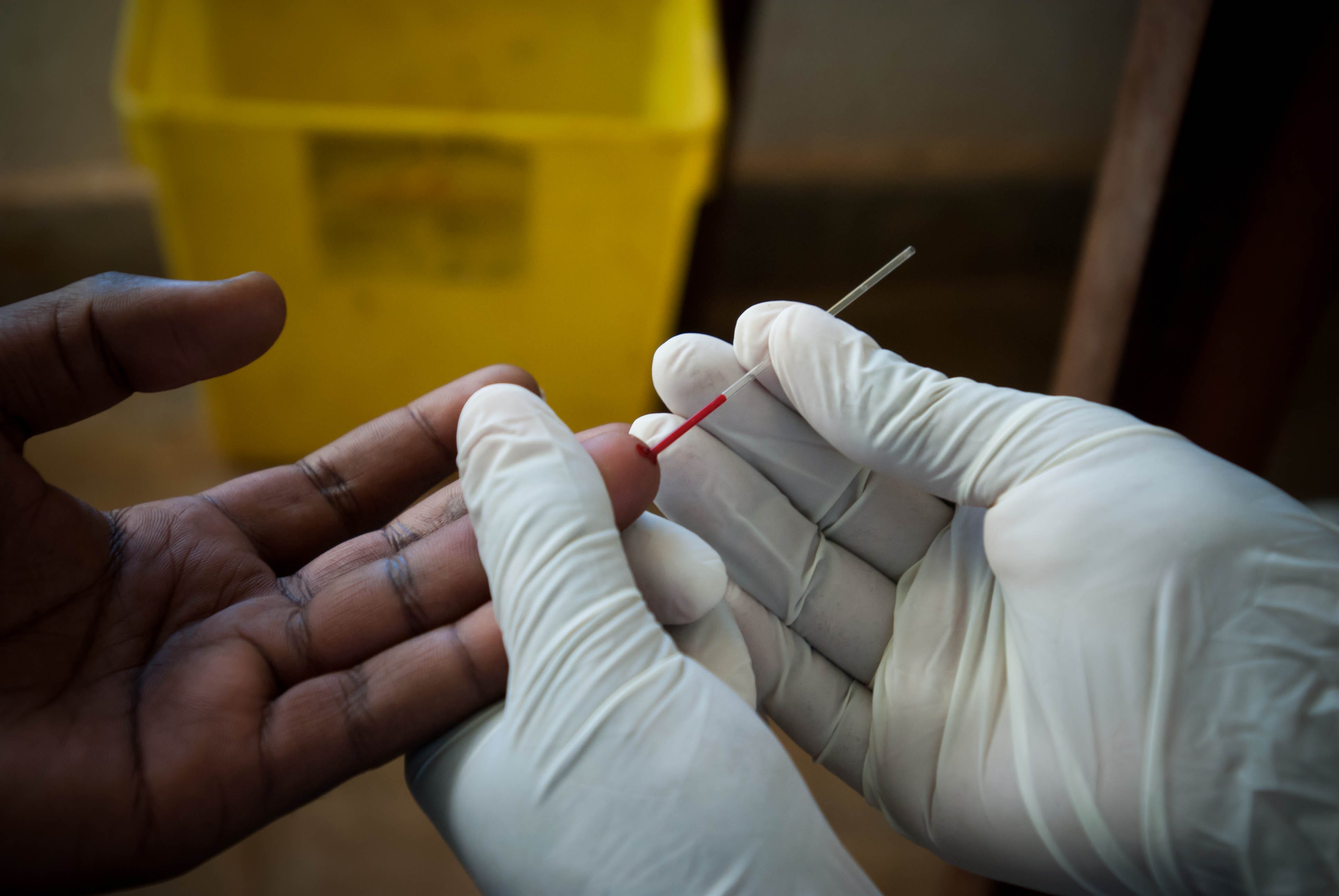
#2 A Total Breakdown in HIV Data
Even asking “how many more people are likely to get HIV because of America’s missing 17 percent?” gets to a deeper problem… which is that we may not know for a very long time.
Globally, last year’s data already points in the direction you’d expect from a collapse in successful HIV prevention. By the numbers: from 2024 to 2025, 4.7 million fewer people were tested for HIV (about 22 percent less), and 2 million fewer people were taking preventive treatment (about 10 percent less). Those are dramatic drops worldwide, and much of it due to a curtailment of the type of work we outlined above.
But understanding the South Africa-specific story is going to be far harder. That’s partly because the United States is no longer publishing detailed quarterly data on country-by-country progress, as it had for decades. But it’s also because the cuts have devastated South Africa’s data collection and electronic medical records for HIV.
As an example, Bass told me that America was underwriting “about 40 percent” of the workforce collecting HIV data in South Africa’s HIV hotspots. Add that sudden curtailment to the loss of detailed American reporting, plus (my read, not Bass’s) a government with little incentive to loudly document a crisis it does not yet have a plan to solve… and you end up with the thing advocates say is already here: a total breakdown in data.
Bass put it to me bluntly: “We think something terrible is happening, and we also think we’re not going to see it, because the data aren’t there.”
The signal she fears may come later will be the sign of total system failure, which is “more people with advanced HIV disease,” she says.
And there’s a compounding risk here. Without rigorous data showing new infections are rising, South Africa may lack the political urgency to replace the very programs that helped keep them down.
It’s on the South African Government Now
The takeaway for me is that the dire warnings about the U.S. pullout of South Africa is, ultimately, not really about the size of the funding gap America is leaving, it’s about the specific parts of the HIV response that Americans were funding.
Still, let me make one final point: because it’s important to hold both these thoughts at the same time. Yes, the U.S. is dumping this transition on South Africa in a haphazard and almost maximally-damaging way. But South Africa is not powerless here. This is a sovereign country with a roughly $400 billion economy; and one uncomfortable answer here is that it is now on the South African government to find hundreds of millions of dollars—roughly one-tenth of one percent of their GDP—to re-fund these programs and protect one of the most important public health fights in the country.
If South Africa fails to do that, then a reckless American withdrawal will become a South African governing failure too.
That’s all for now,
-Wm
This is not anywhere near the complete story. Behind the public rationale is the Trump administration’s spurious claims of “white genocide” in South Africa and a broader geo-political fallout, of which HIV support has become one casualty. I’ve stuck with the official argument about South Africa’s financial capacity, because it’s worth tackling at face value, even if it’s almost certainly pretextual.