
If you’re not sure how concerned to feel about the newest outbreak of Ebola in the Democratic Republic of the Congo, you’re not alone.
We’re still just barely out of the shadow of the last pandemic, and I sense that, since COVID, we’ve lost some of our ability to separate scary-sounding diseases from genuinely threatening outbreaks.
Consider, for example, how we just turned the page on the Hantavirus-cruise-fiasco, with zero fanfare. That was a story that received an astronomical amount of coverage, despite the fact that the public worry was wildly out of step with how ‘objectively scary’ the outbreak was. (If you’d like to read more about it, I’m on record on this one.)
And for Ebola specifically, last September we watched a separate outbreak in DRC flare up, trigger a major response, and get quashed with extraordinary speed. That emergency response was particularly impressive and reassuring because it was one of the first to follow 2025’s steep drop in international emergency funding… which many warned would leave the world less able to stop outbreaks.
But this outbreak does not look like last September’s for a variety of reasons. So, to understand the outbreak in context, I spoke with Dr. Lina Moses, an epidemiologist at Tulane University. Moses was a first responder during the largest ever outbreak of Ebola, the 2013 to 2016 epidemic across West Africa. We chatted about what’s different now, and why this outbreak is causing so many alarm bells.
Here’s my takeaway up top: This is a worst-case-scenario Ebola outbreak, and I would be extremely surprised if it is contained this year, or even early next. We’re dealing with a rare strain of the virus, where our vaccines and treatments don’t work, but the real issue is where this virus is hitting. The last outbreak in this part of DRC took over two years to contain. Still, it’s worth emphasizing that this is not a COVID-like threat. I’ve had half a dozen people ask me if I’m concerned about being relatively close in Kenya, and my answer is an emphatic no. Ebola is simply not the type of disease that can spiral unchecked in any country with a semi-competent health system. So, ultimately the global risk is very low, or as Moses told me: “There is no indication at this point that people outside of this region are going to be personally affected.”
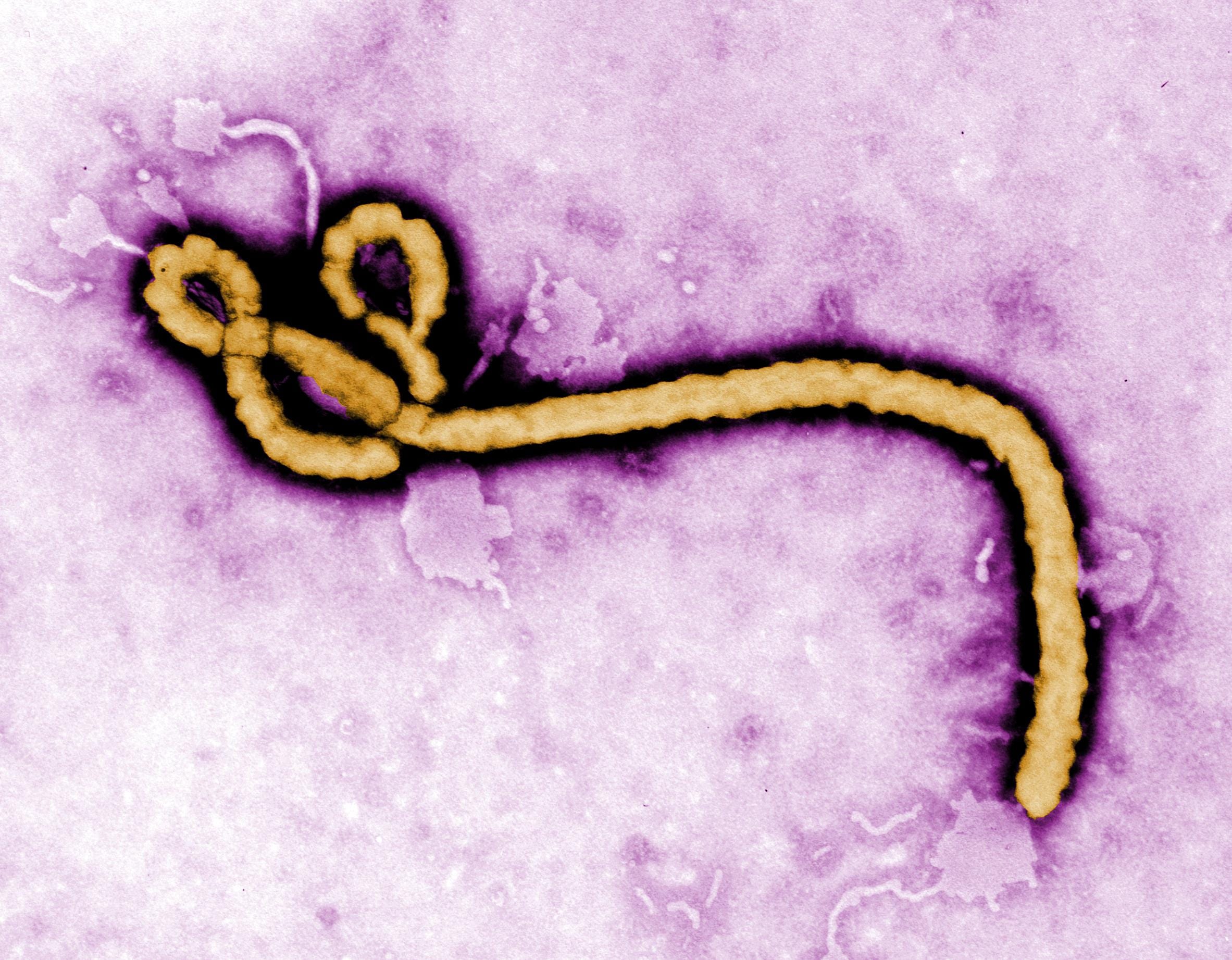
First, the basics: What is Ebola, and where exactly is the outbreak?
Disease breakdown: Ebola is a slow-moving but deadly virus in the terrible family of “hemorrhagic fevers.” It’s a virus that first occurred in 1976 and is contracted through infected animals, blood, or other bodily fluid. (It usually spills over to people from fruit bats, who contract and spread the disease among themselves.) Because symptoms often end in organ failure and internal/external bleeding, the average fatality rate is roughly around 40 to 50%. Ebola really is a nightmare disease, but one with a key weakness: It moves slowly, because it requires direct contact with infected people or contaminated objects to spread.
This particular Ebola outbreak is the Bundibugyo strain, a somewhat rarer form of the virus. That matters not because it’s more deadly or threatening (it’s not), but because the existing Ebola vaccine and treatments we’ve developed do not appear to work against it. (Luckily, as reported by Deutsche Welle, we’re seeing a rush to adapt the medicines as fast as possible.)
So far, the disease is spreading in the three highly-populated provinces in eastern Democratic Republic of the Congo—Ituri, North Kivu and South Kivu—with spillover also reported in Uganda. It’s worth noting that we’re still early enough in the outbreak that we have only a poor, fragmented picture of the initial spread. But as of May 28, the World Health Organization says there are more than 900 suspected infections and 220 suspected deaths reported so far. This is almost certainly an undercount.
While the outbreak is the 17th in the country, since Ebola was first discovered in 1976, it’s already on track to be one of the largest ever recorded. That is largely because the outbreak was detected late, after weeks or months of spread. “It is very, very concerning that we’re getting in this late,” Moses told me.
Why is eastern Congo such dangerous terrain for Ebola?
The epicenter of the outbreak is a province called Ituri, and the location itself explains a lot about why public health professionals are so worried. The province is extraordinarily underdeveloped, but not actually very remote. Remoteness is helpful, because managing fewer people and contacts makes organizing an orderly response easier. (Both the Ebola outbreak in DRC last year, and the closely-related-Marburg-virus outbreak in Ethiopia last year, were contained in remote locations.)
Instead, Ituri is densely populated, with very active and porous borders, weak government services, and decades of violent conflict continuing into the present day. This combination of people, movement, and chaos makes Ituri one of the hardest places in the world to organize the basic public health measures. That’s because isolating patients, tracing contacts, warning communities, and getting sick people medical care as fast as possible all require some level of orderly, centrally-managed systems.
Moses said it is no coincidence that the second-largest Ebola outbreak ever recorded unfolded in this same broader region in 2018. That outbreak took two years to stop, she said, “primarily because of the difficulty in implementing community-based interventions: contact tracing and infection prevention and control across all the health facilities.”
It’s also important that this outbreak has already spread into neighboring North Kivu province. North Kivu faces many of the same problems as Ituri, but with even more active conflict—making control efforts even harder. Currently, the Rwandan-backed M23 rebel group occupies a large stretch of the borderlands, including Goma, the provincial capital, which it captured in January 2025. Goma is important because the city has historically been used as the command center for hemorrhagic fever responses in eastern Congo.
The picture is still unclear, but with the city under occupation, Ebola testing facilities appear to be nonfunctional in Goma. That may be one reason the disease was detected so late. Nearly all confirmed cases so far have been identified
by a laboratory in Kinshasa, the national capital, on the other side of the country. As Moses told me: “I was shocked at the low number of laboratory-confirmed cases already, and that this had to be done in Kinshasa, very far away. I was surprised that there wasn’t testing closer.”
Ok, so this bad in the normal Ebola way, or bad in a new way?
Bad in a new way, at least compared with recent outbreaks. (Moses cautioned that outbreak detection, in general, is far better than it was 10 or 15 years ago.) But by today’s standards, the outbreak was caught very late. “It does look bad, relatively speaking,” she told me.
One very worrying sign is that this outbreak will require an extraordinarily expensive response at the exact moment global emergency funding is under historic strain.
Granted, funding woes did not derail last year’s successful Ebola response in DRC, as I mentioned earlier. But those outbreaks were smaller and far easier to financially manage… because with Ebola, every individual missed case results in an exponential cost. If one sick person infects two more people unchecked, who each infect another two more people… well, that doubling effect will quickly balloon out of control. Every missed case means significantly more contacts to trace, even more people to monitor, even more healthcare workers sick, and, ultimately, that many more chances for the virus to slip into a new town or across a border.
I will underscore here that despite everything I have just said, this is still not a true global pandemic threat, largely because Ebola moves so slowly and generally requires direct contact with the visibly sick or dead. As a disease it may be terrifying and deadly, but it is still slower than any semi-competent health system and public health response.
The problem is that eastern Congo does not have that kind of health system. And the international public health response will have to work through everything from active conflict to distrustful communities that have met past Ebola responses with violence. Even more tragically, medical professionals are often among the first people infected by an Ebola outbreak, disabling the very corps of workers needed to stop the spiral.
What can we realistically expect next?
I’m not in the forecast business, but moving forward: this outbreak will almost certainly continue to spread, and cases in Burundi, South Sudan, or Rwanda over the next weeks and months would not be surprising. (I will note that Rwanda, at least, will be able to effectively manage any cases). It is also possible that isolated cases, most likely linked to infected medical workers, could travel farther. But if the worry is horror-movie spread across the world, that’s totally misplaced. This is just the wrong disease for that concern.
And what should we be watching for?
Moses told me there are two kinds of warning signs she’ll be watching for: signs the outbreak itself is spreading, and signs the response is not keeping up.
The first includes more cases crossing provincial or national borders, especially into major travel hubs. As of May 29th, we’ve seen 8 cases in Uganda so far (which is not a great sign.)
The second category is more operational. Moses said the red flags would be “a low percentage of laboratory-confirmed cases relative to suspected cases,” gaps in contact tracing, and info on whether identified contacts are actually “being monitored” through the incubation period. Other warning signs, she said, include how many health facilities are receiving protective equipment and infection-control training, and whether there are reports of “unrest or resistance against the response.”
Like Moses, I’ll be watching for signs of all of these.
And then there are health workers, which are a tragic, canary-in-the-coalmine indicator. Medical professionals are often among the first people infected by an Ebola outbreak.“People notice when healthcare workers go down,” Moses told me. “With Ebola, it tends to be clusters of healthcare workers, and they’re often the second wave, and a very large wave.” In the coming weeks, this will be a sign of how out-of-control the virus really is.
Ultimately, how does this compare to Hantavirus?
Where Hantavirus produced a global overreaction, the attention on this Ebola outbreak is absolutely warranted.
Now, that said, let me say something counterintuitive: the Andes strain of Hantavirus (the one behind the cruise fiasco) is, on paper, actually a more threatening outbreak disease than Ebola.
Yes… that sounds ridiculous after everything I’ve just written, but it’s true.
Andes hantavirus is roughly as deadly, we have similarly few medical defenses against it, but it spreads more easily, because it can move through respiratory transmission. On paper, that makes it more threatening than Ebola. But outbreaks do not happen on paper.
As Moses put it, “The biggest driver of epidemics is behavior, public health infrastructure, human behavior, and health facilities. It’s always situational.” And the situation for Ebola, merely by being in Eastern DRC, is just that much worse.
Rather than a contained cruise ship, full of mostly wealthy travelers, with public health officials from a dozen countries ready to quarantine and treat them… in DRC we have an admittedly less transmissible virus but in a far more dangerous setting: A conflict zone with damaged or nonfunctional labs, porous borders, and an abysmal health systems.
I’ll be following up on this story.
-William
William, I am so glad you are continuing this important work and sharing your particular insights. It makes us all smarter.